Stratus Labs Research
For nurses, medics, pilots, and anyone who works while the world sleeps
You slept a full day and you're still wrecked.
Night workers get told to fix their sleep. The research says the real damage is a debt that builds where sleep can't reach. Four findings, each study named, and the one lever you still have.
Pay down the night shift debt
Free shipping · 90-night money-back

The five-minute version
What the research actually found
0.05%Cognitive impairment from a night shift's sleep loss, equal to the legal drink-drive limit.Occ & Env Medicine, 2000
10 daysTo bend a healthy metabolism toward pre-diabetic.Harvard · PNAS, 2009
−17%Drop in leptin, the hormone that tells you you're full.PNAS, 2009
NAD+↑Oral NMN raised blood NAD+ in placebo-controlled human trials.Pooled human trials
By 4am, the night-shift brain tests like it's been drinking.
Alertness isn't flat across a shift. It bottoms out between 3 and 5am, at what researchers call the circadian low.
The brain at 4amreaction time, focus, judgement
≈
Legally too drunk to drivethe measured impairment matches
A 2000 study in Occupational and Environmental Medicine measured that hour directly. Moderate sleep loss produced impairment equal to being at the legal blood alcohol limit for driving.
You're not weak for struggling at 4am. It's built into the clock in your brain, and willpower is the wrong tool for it.
Ten days is all it takes to start bending your metabolism.
People assume shift-work damage takes decades. It starts in days.
10DaysHarvard · PNAS · 2009
↑Post-meal blood sugar climbed.
−17%Leptin, the fullness hormone, dropped.
3 / 8healthy adults crossed into a pre-diabetic range.
Healthy people. Ten days.
Your weekend catch-up sleep fixes your mood. Not the rest.
This is the one that explains why a full day of catch-up sleep still leaves you moving through wet sand. Researchers ran people through the exact rhythm shift workers live: short sleep on work days, long catch-up on the weekend.
✓Mood, recovered after the catch-up sleep
×Insulin sensitivity, still impaired
×Weight, still climbing, sleeping as much as they liked
What weekend catch-up sleep did, and didn't, put back. Current Biology, 2019.
A 2019 trial in Current Biology found the catch-up sleep fixed their mood, but their insulin sensitivity stayed impaired and they kept gaining weight, sleeping as much as they liked.
Catch-up sleep helps your head. It doesn't undo what the shifts do to the rest of you. That's why a full day in a dark room never put it back, and why the days off you meant for your family get spent recovering instead.

Underneath every finding above is one molecule running low.
Every cell runs on a coenzyme called NAD+, the charge cells spend to turn food into energy and run their own repairs. It falls with age, and research shows sleep loss and a disrupted clock draw it down further.
Less NAD+, less repair, in the short window between rosters. That's the tank a day in bed doesn't refill. That is the debt.
The strongest levers are still the boring ones: guard your day-sleep, get light early in the shift, keep a daytime eating window. Beyond those, one direct input. NMN, short for nicotinamide mononucleotide, is the precursor the body turns into NAD+. In several placebo-controlled human trials, oral NMN raised blood NAD+ and was well tolerated.
The honest caveat: no trial has tested NMN in shift workers specifically, so it's promising, not proven. If a page tells you a capsule fixes your roster, close it. This is one honest input for the layer the schedule keeps draining, taken in the morning, not before sleep.
One ingredient, 500mg, the dose the studies used.
Pay down the debt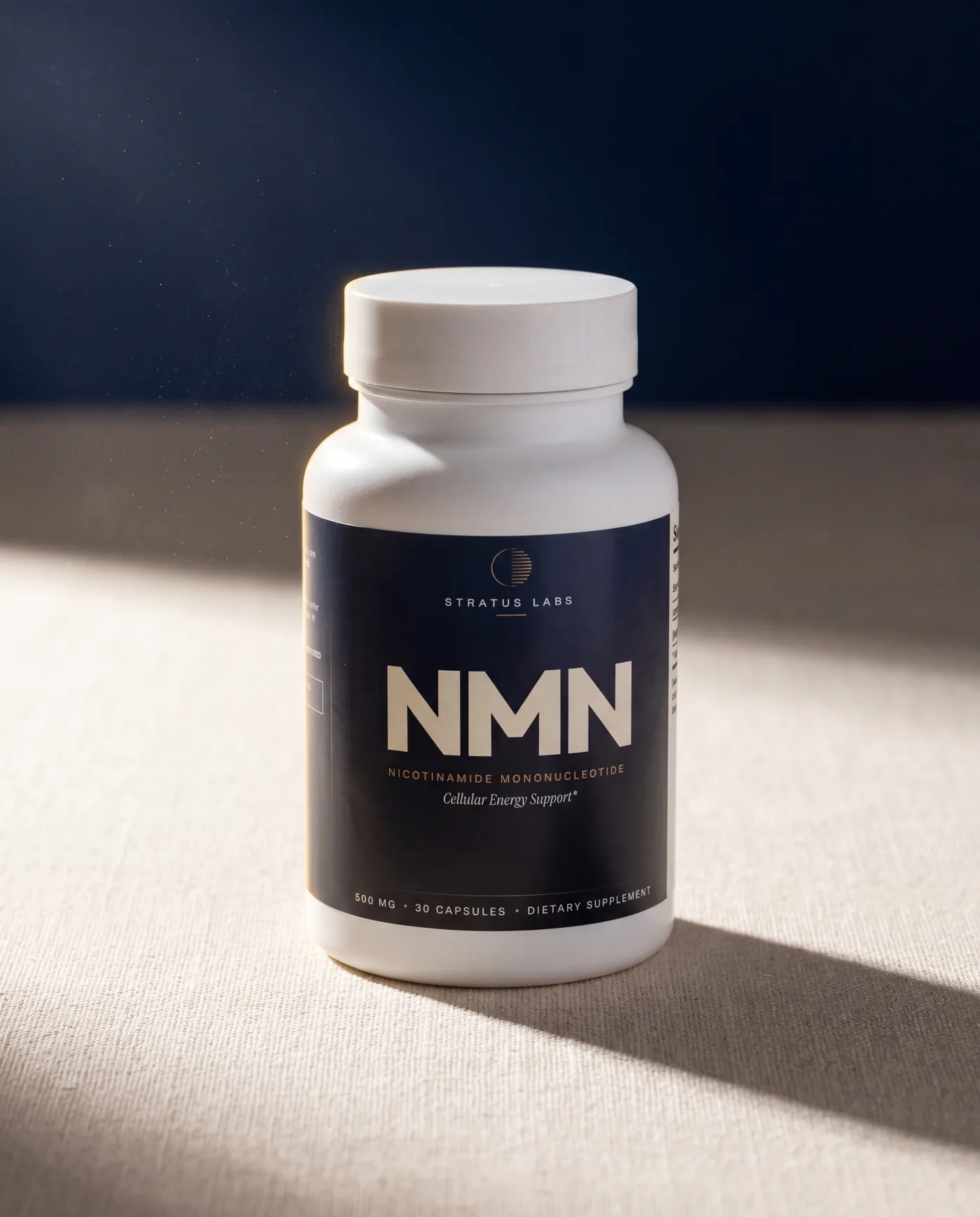
The one lever you can act on
Stratus NMN. One ingredient, a full dose.
500mgA full dose, the range the studies used.
1One ingredient. No blend, no fillers.
USMade in an FDA-registered cGMP facility.
90Nights to judge it. Keep the bottles.
$47 a month, about $1.57 a day. One capsule in the morning, not before sleep. Cancel any time.
Built by a commercial pilot who works the same rotating rosters.
We're new, so the proof here is the science, not star ratings. No invented reviews. We'd rather show you the research and let 90 nights decide it.
Every shift adds to the tab. The sooner you start, the less there is to pay down.
Pay down the night shift debtFree shipping · 90-night money-back · cancel anytime
P.S. Of everything above, this is the one lever most people never put a plan against, and it costs less than the coffee you already buy to get through a shift. 90 nights to judge it, on us. If it does nothing for you, you're out nothing but the few minutes it took to try.